CNC Machining
Precision CNC Machining
CNC machining – milling and turning
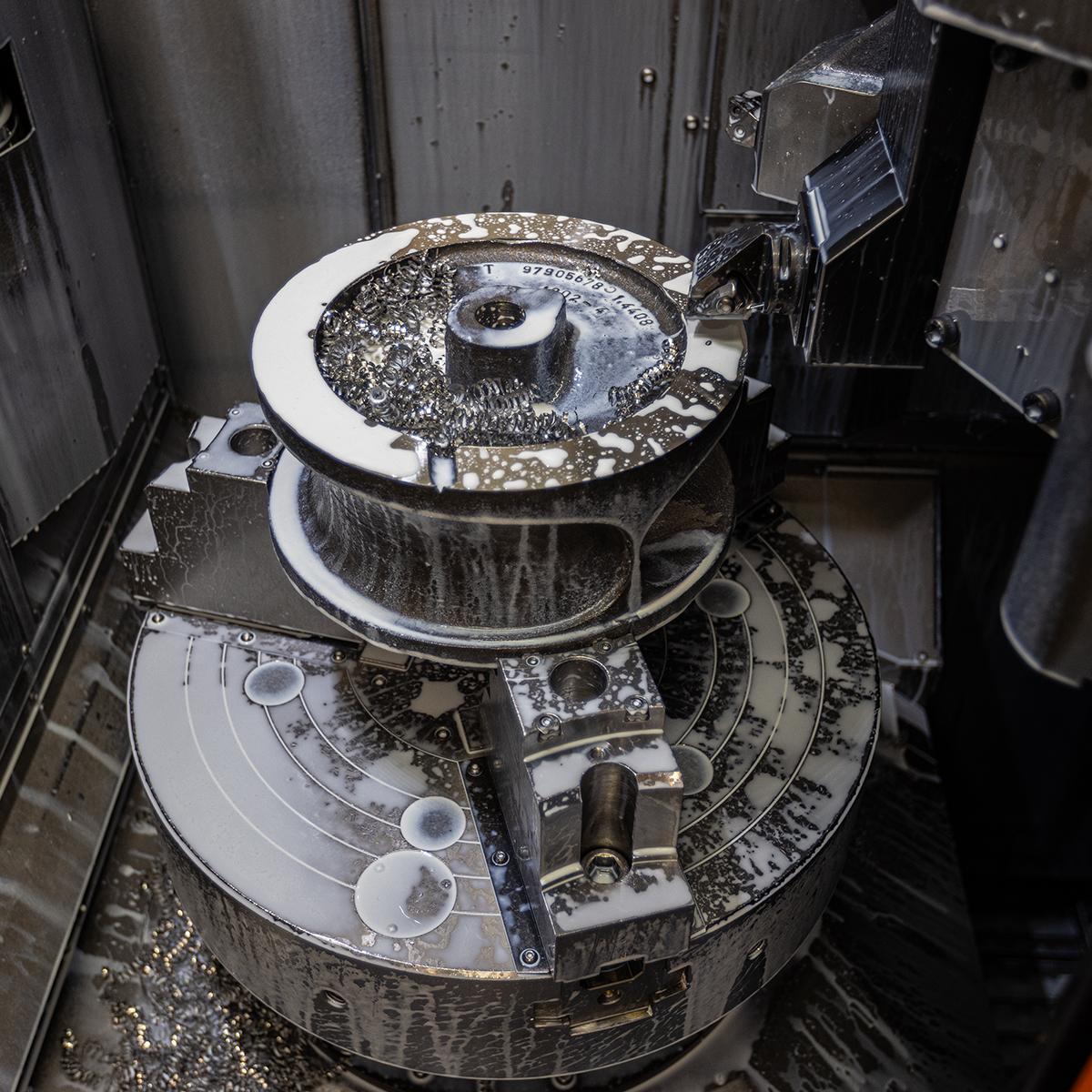
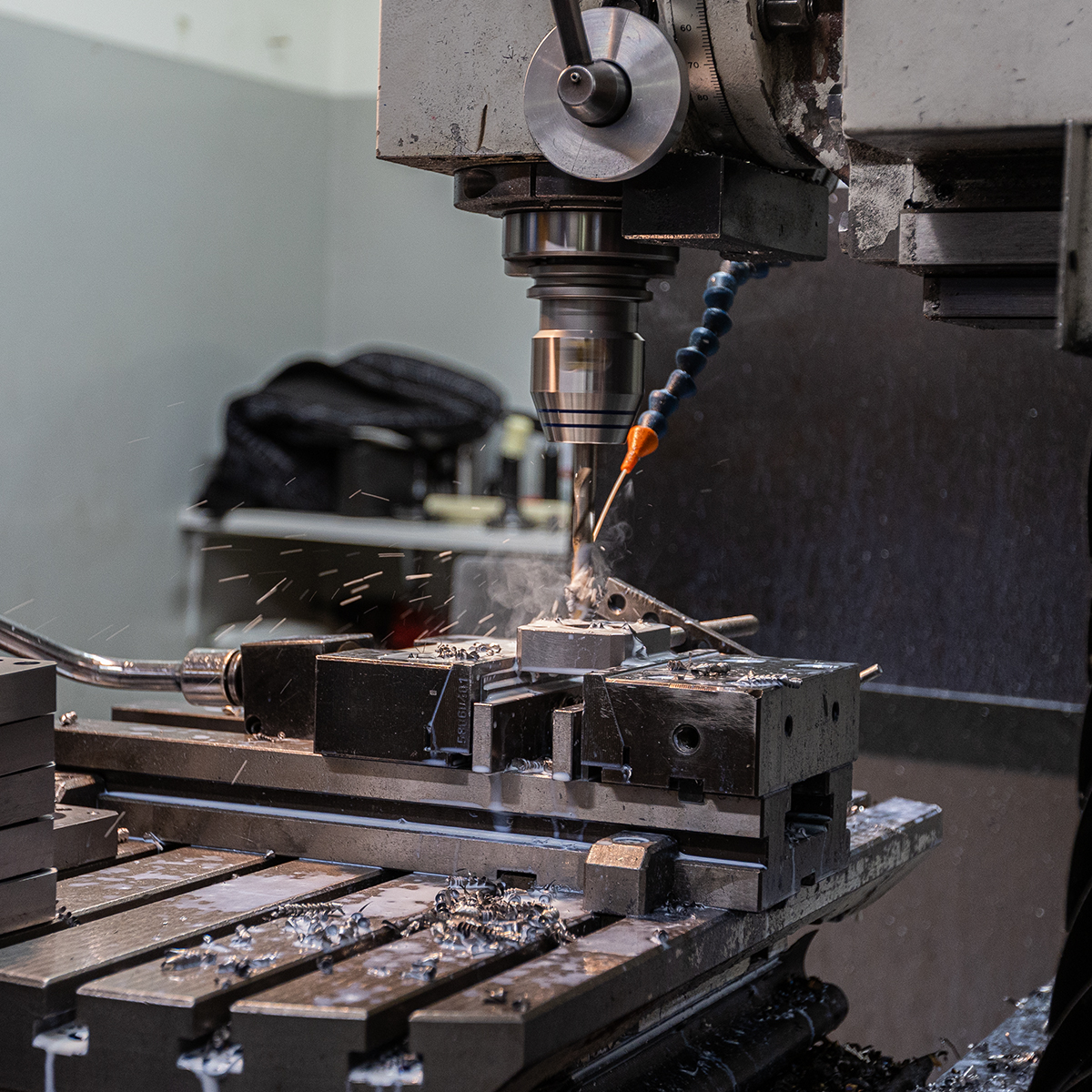
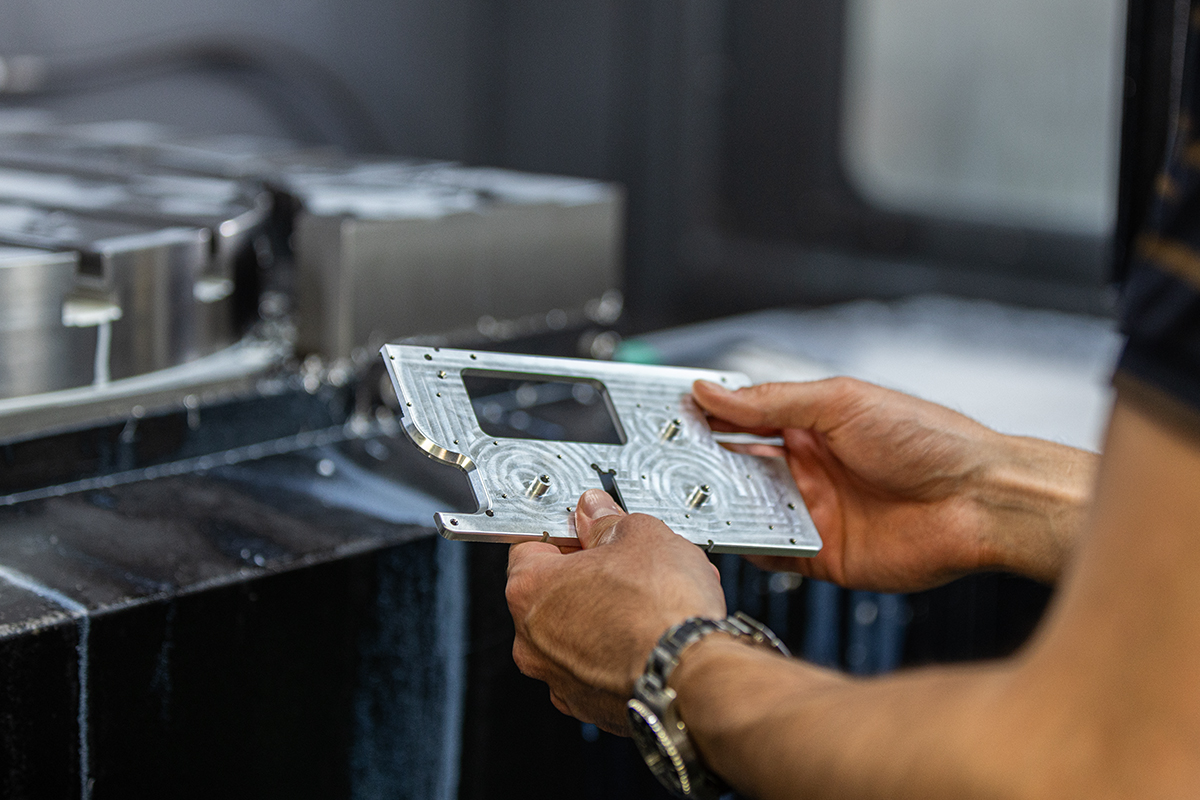
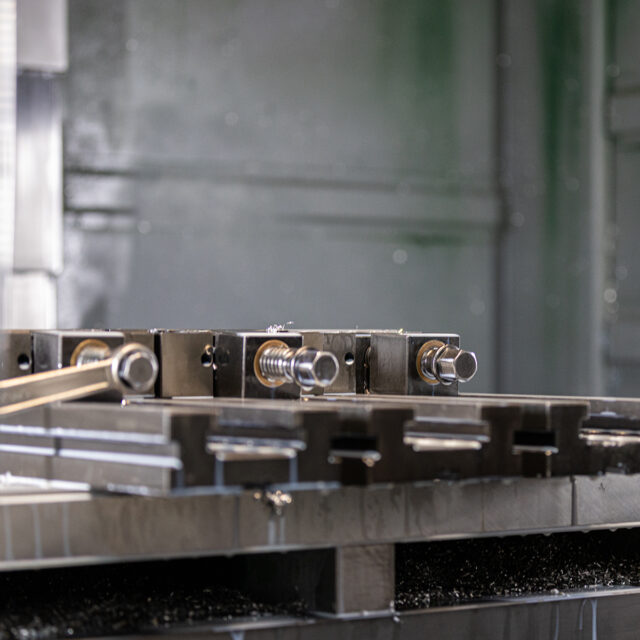
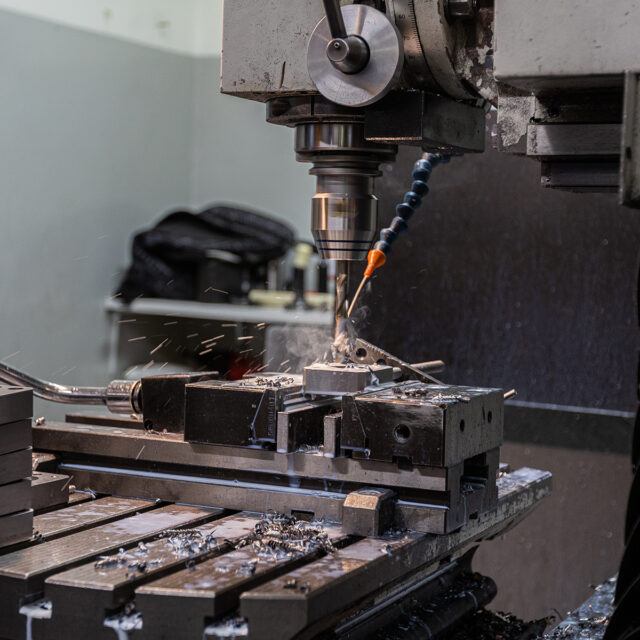
CNC machining is an umbrella term – at Julius-Globe it primarily refers to CNC milling and CNC turning, which form the backbone of precision component manufacturing.
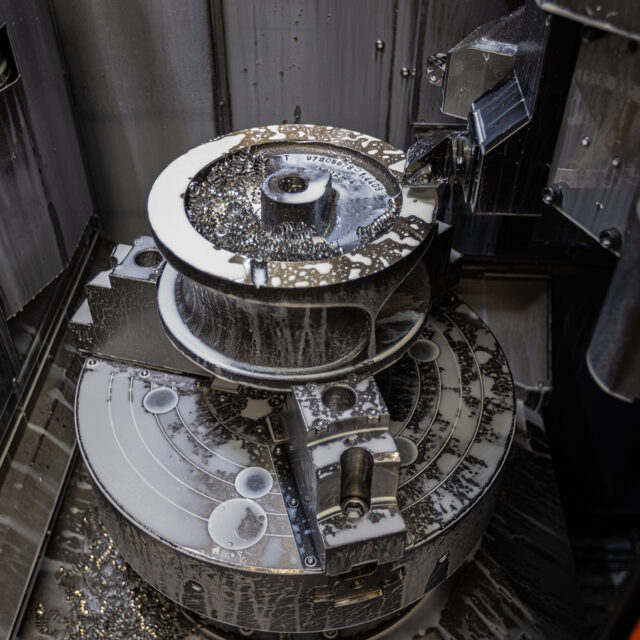
CNC milling: in 3-axis and simultaneous 5-axis configurations. The 5-axis centre completes the entire machining sequence in a single clamping – shorter lead times, fewer error sources, more precise geometric results. Complex features – slots, angled bores, curved surfaces – can be machined in one setup.
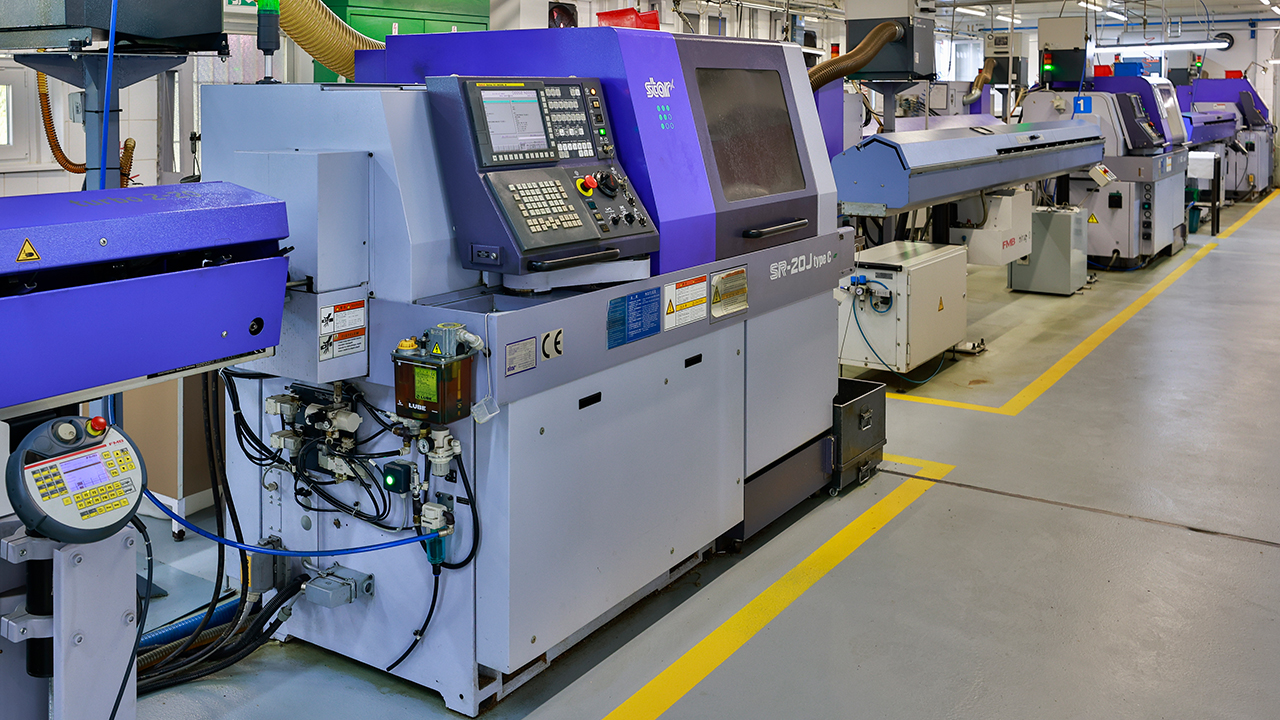
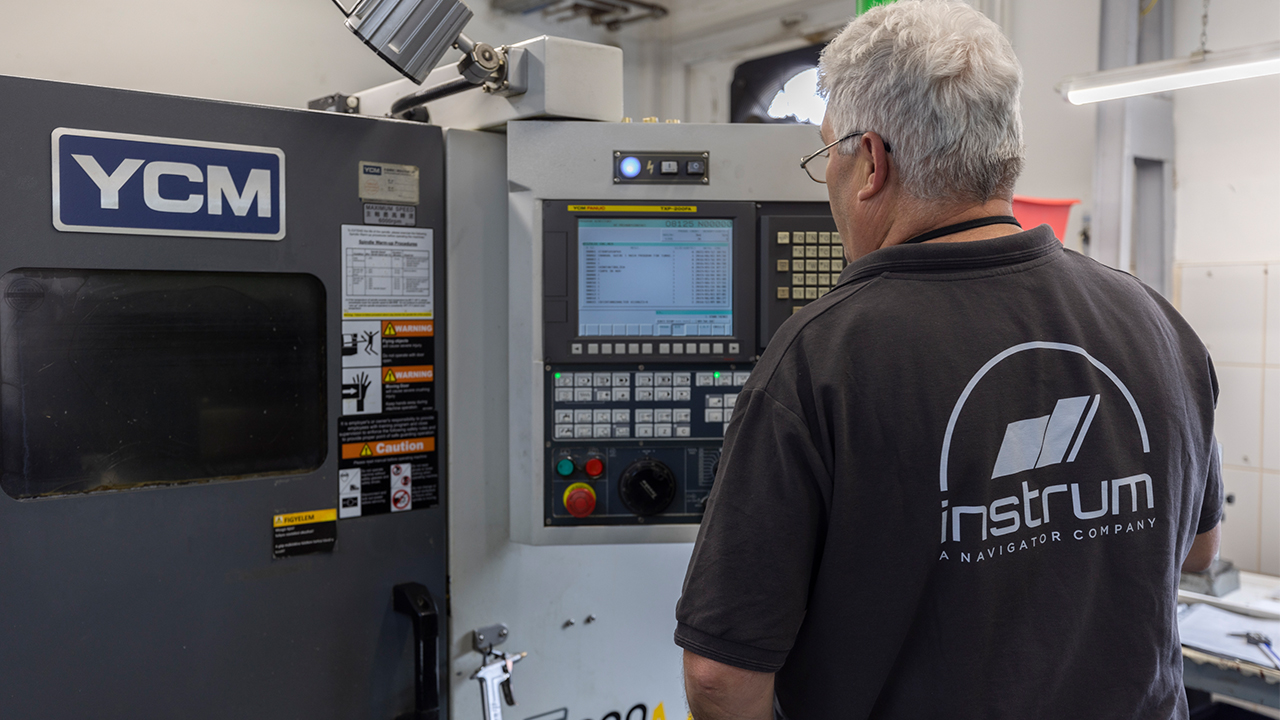
CNC turning: on machines with driven tools and turret head, with milling capability. Machining range: from bar stock Ø20-70 mm, from cut blanks up to Ø220 mm, from 10 to tens of thousands of parts (Swiss-type turning also available through our sister company Instrum Ltd.).
Manufacturing preparation is fully digitalised: using CREO, CATIA, EdgeCAM and ESPRIT – the CNC program is generated automatically from the 3D model and transferred to the machine without manual re-coding.
Grinding
Grinding is a machining operation with geometrically undefined cutting edges, capable of producing high-precision, smooth – even mirror-finish – surfaces. It is used primarily as a finishing operation, although high-power grinding machines are also suitable for roughing and semi-finishing.
Our machine park is equipped for surface, cylindrical and internal grinding. Our centreless cylindrical grinding machine performs throughfeed grinding of external surfaces:
- Diameter: 4 mm-40 mm
- Maximum length: 300 mm
- Centreless grinding up to 80 mm diameter is available through our sister company Instrum Ltd.
Grinding is particularly important for components requiring tight tolerances and excellent surface quality after turning or milling – for example bearing seats, sealing surfaces and precision fits.
Electrical Discharge Machining – EDM
EDM (Electrical Discharge Machining) is indispensable for components with complex geometries that are in a hardened or high-hardness state, or cannot be economically machined by conventional cutting methods.
Julius-Globe has both wire EDM and die sinking EDM capacity:
- Wire EDM: precision cutting, complex contours, tight tolerances in hardened materials
- Die Sinking EDM: cavities, pockets, internal contours, die and tool cavity features
- Start-hole drilling: preparatory operation prior to wire EDM
This technology is particularly important for components made from tool steels and Inconel alloys, where conventional machining is not applicable or only economically viable with great difficulty.
Materials we machine
Steels
Stainless steels & non-ferrous metals
Special alloys
Engineering plastics
Surface treatment and heat treatment
Heat treatment: vacuum hardening, case hardening, oil hardening, laser hardening, induction hardening, nitriding.
Coating and surface protection: nickel plating, Teflon coating, Halar (ECTFE coating), PVD, CVD, powder coating, zinc plating, blackening, hard chrome plating, thermal spraying, zinc flake coating.
Aluminium surface treatment: anodising (colour and natural), hard anodising.
In-house surface treatment: sandblasting, shot blasting, polishing, ultrasonic cleaning, mechanical and laser engraving.
Quality control laboratory
Julius-Globe has its own quality control laboratory, where the following instruments ensure uncompromising quality assurance:
- Wenzel 3D LH87 (measurement range 1500x800x600 mm)
- Wenzel 3D (650x1000x500 mm)
- Nikon ALTERA 15.10.80 (3D coordinate measuring machine – 1500x1000x800 mm)
- Nikon MCA x25+ 3D measuring arm (with laser scanning probe)
- SPECTROMAXx F spectrometer (material composition analysis)
- QNESS Universal hardness tester (Rockwell, Brinell, Vickers)
- SYLVAC Z_CAL (350 mm height gauge)
- Surface roughness gauge, coating thickness gauge
- Tool presetter
- Digital Wi-Fi hand measuring instruments (automatic data transfer to Excel)
ISO 9001:2015-certified processes cover measurement documentation in full. We have manufactured components for ventilators, and our R&D projects have included the development and manufacture of a knee prosthesis and a dental measuring instrument. We are also an accredited defence industry and audited aerospace supplier – we meet even the most demanding quality requirements.
Instrum Ltd.
CNC Swiss-type turning
CNC turning
Industries served
Put Julius-Globe to the test
Since 1998