Our Company Featured in the BÉT50 Publication: Hidden Treasures of the Hungarian Economy – 50 Inspiring and Successful Companies in 2017
Julius-Globe Ltd. owes its success to reliability, flexibility, and continuous improvement. Its advanced manufacturing technology and highly skilled, loyal workforce consistently achieve high levels of customer satisfaction — especially in international markets. Korszerű gyártástechnológiája, magasan képzett, lojális munkatársai nagy vevői elégedettséget érnek el – főleg a nemzetközi piacon.
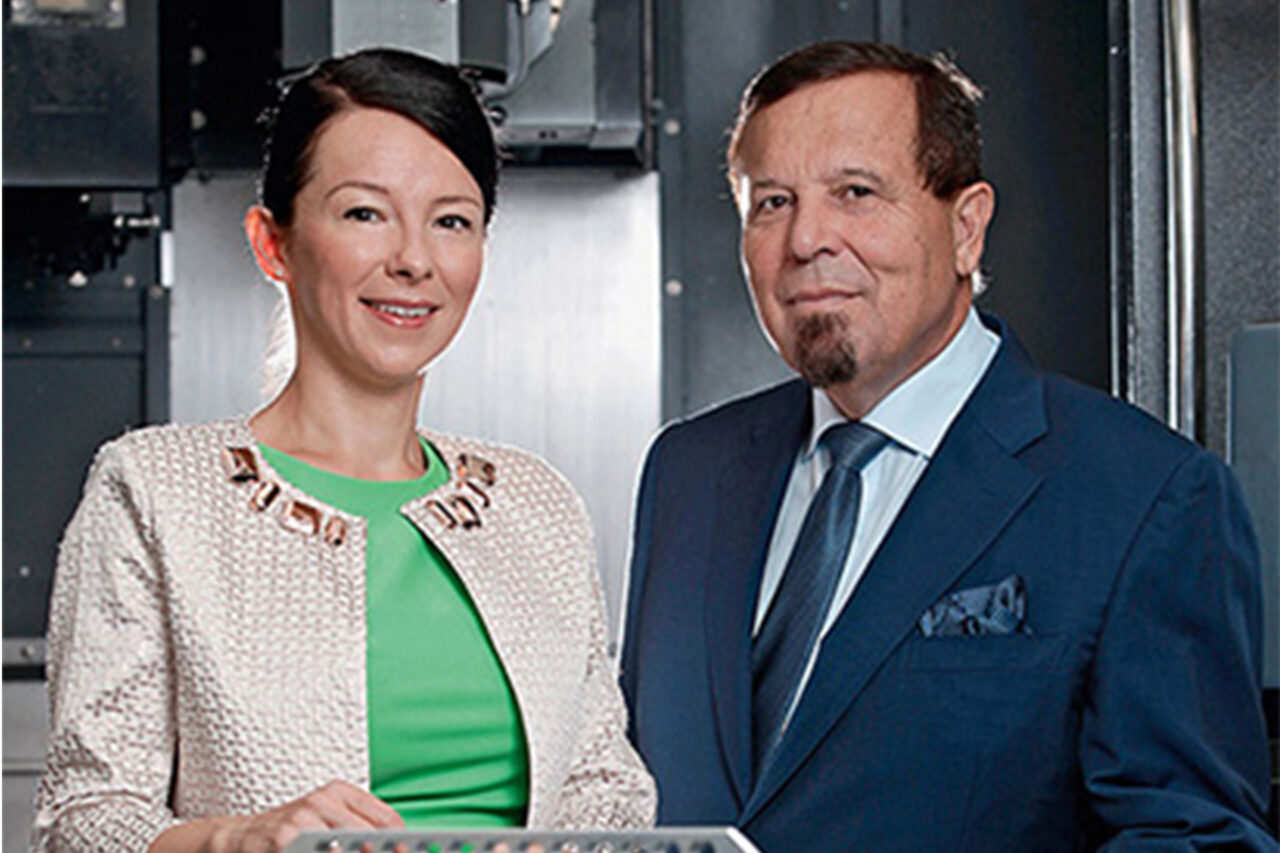
A metal “logic globe” was one of the first products of Julius-Globe Ltd., founded in 1998. As quality manager and co-owner Erika Rácz explained, the dynamically growing Hungarian-owned company now exports close to 60% of its precision machined components and equipment, while also maintaining a significant share of the domestic market.
The development milestones are clearly visible in their 2,800 square metre production facility in Győrújbarát, near Győr, equipped with a modern machine fleet. They recently came into the spotlight by winning the European Business Excellence Award — an award they entered not only to be benchmarked domestically but also internationally, gaining further recognition along the way.
Multiple generations work here together in a family-friendly environment. The enthusiasm of younger colleagues is backed by the professional experience and knowledge of more senior staff. As technology advances rapidly, the team continuously develops their expertise to keep pace.
The company, which employs 41 people, offers its workers above-average salaries as well as additional benefits such as housing loan support.
They have extensive experience in CNC precision machining of components for sectors including healthcare, instrumentation, automotive, packaging, and high-tech industries, as well as in the design and production of fixtures and complex assembly lines for automotive suppliers.
Their first major partner was Philips. At that time, they ran a factory in Győr exclusively for the Dutch company, with around 250 employees working three shifts on the assembly and reworking of electronic and mechanical components. The company’s exposure to Philips was enormous — in 2004, the Dutch firm still accounted for over 90% of their total revenue. This is where they learned flexibility, which managing director and owner Gyula Rácz still considers one of their most important competitive advantages today. Due to production line stoppages, they often had to go to the factory at night or on weekends to solve problems — he recalls from those early days. On many occasions, their innovative problem-solving managed to get the Philips lines back up and running. Alongside flexibility, expertise also proved to be key. Gyula Rácz believes: without the five-year toolmaking vocational school in his life, there would be no factory and no business at all. He later earned degrees in mechanical engineering and economics, which he also puts to good use in various business and banking dealings.
Following Philips’ withdrawal, they gradually distanced themselves from the Dutch company from 2004 onwards, and in 2010 closed the production unit that had worked exclusively for them. They were later able to replace the lost business with orders from Robert Bosch, Siemens, Audi, and other large multinational companies. Julius-Globe’s revenue, EBITDA, and personnel costs have grown every single year since 2013 — achieved through technological development, diversified industry exposure, and supply to multiple sectors. “The market is constantly changing — you can never afford to sit back,” emphasises Gyula Rácz.
Interestingly, we are having this conversation in a separate office within the plant, separated by just a single wall from the garage-sized room where the whole business started about twenty years ago. Alongside their modern CNC grinding and turning machines, they also have nine CNC machining centres.
They are now planning to purchase their sixth 5-axis CNC machine. “This is also an industry where you cannot afford to stop developing,” says Erika Rácz. “Year after year, more precise, technically advanced, and automated machines come onto the market — and our customers demand increasingly precise components from us, which can only be produced with modern, high-accuracy machining equipment.”
The first two simultaneous 5-axis machines were purchased just a few months before the 2008 financial crisis hit. Because order volumes dropped, there was plenty of time for staff to master machining on what were then brand-new types of equipment. According to the managing director, this is precisely why they were able to recover from the crisis quickly — they reacted fast, and — though not yet consciously at the time — they were already diversified, supplying multiple industries. Another important factor was that they had no working capital loans — they had always financed this from their own resources. It also worked in their favour that the energy industry felt the crisis with a delay of about eighteen months: in 2009 they still received significant orders from their largest partner, Siemens. The lesson from the crisis for them is clear: you really must invest and develop during a downturn. It is a major advantage if a company can finance its working capital from its own resources, and the broader the customer portfolio, the more secure the future.
For years they have also been conducting experimental R&D on behalf of both Hungarian and international partner companies. They closely follow Industry 4.0 developments and integrate them into the equipment and devices they design, manufacture, and commission — including laser and optical sensor networks, camera systems, and automated assembly systems. In this way they help their customers advance their manufacturing processes and increase production capacity.
For the owners, vocational training remains an important part of the company’s operations. In the past 11 years, nearly two hundred apprentices have completed their practical training here. They participate in several career orientation programmes to introduce as many students as possible to the trade and attract technically minded young people to the metalworking industry. Through their day-to-day operations they see first-hand how valuable skilled professionals are — and they hope that careers requiring metalworking and engineering knowledge will become increasingly popular among young people.
Source: BÉT50